

 WhatsApp

DOING HOLDINGS
Henan Doing Environmental Protection Technology Co., Ltd
E waste recycling machine manufacturer
- WhatsApp: +86 150 3713 8562
- Email: market@doinggroup.com

FAQ

Is Recycling Old or Broken Solar Panels a Profitable Industry?
 August 25, 2026
- FAQ
- Leave a message
- Chat online
Solar panels are designed to last for decades, but that doesn't mean they'll stay in service forever. Some are damaged during transportation or installation, while others are removed from solar farms after reaching the end of their service life. As the number of end-of-life and damaged panels continues to grow, the question is no longer just how to dispose of them, but whether recycling them can actually make money.
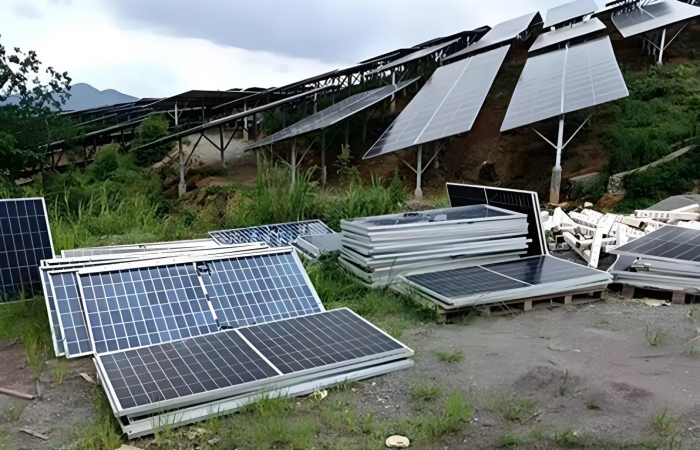 Recyclable waste photovoltaic panels
The answer is yes—but it's not as simple as collecting old panels and selling the materials inside them. The profitability of a waste solar panel recycling business depends on how much you pay for the panels, how far you need to transport them, how efficiently your equipment processes them, and how much value you can get from the recovered materials. If these factors are managed properly, old and broken solar panels can become a valuable source of recyclable materials rather than a disposal cost.
Where Does the Profit Come From?
A typical PV panel contains aluminum, glass, copper, silicon and smaller amounts of other valuable materials. Aluminum frames and copper are relatively straightforward to recover and already have established recycling markets. Glass makes up a large part of a solar panel by weight, while silicon-containing materials can add further value depending on the recycling process and the quality of the recovered products.
This is where the economics of a scrap PV recycling business come into play. You are not really making money from the old solar panel itself. The business comes from processing the waste panel and turning its different material fractions into products that can be sold.
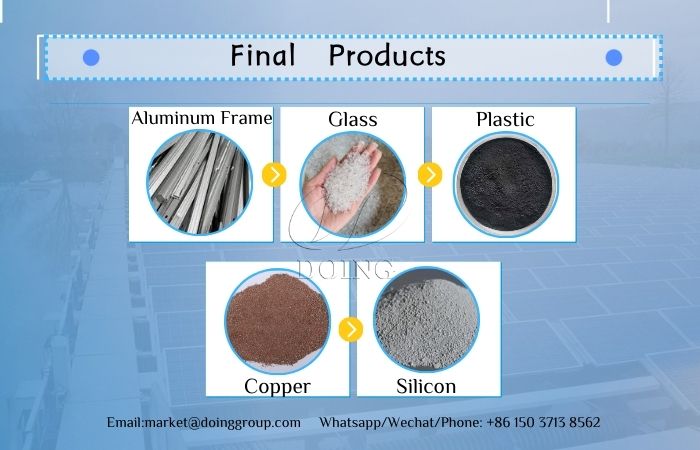 Final products of photovoltaic panel recycling
In some markets, recyclers may also receive collection or treatment fees for handling end-of-life PV modules. Whether this is available and how much it contributes to revenue depends on local regulations and market conditions.
The basic business model can therefore be summarized as follows:
| Revenue / Cost | What it means for a PV recycling business |
| Recovered aluminum | Recovered mainly from the panel frame and can be sold into established aluminum recycling markets |
| Recovered glass | Makes up a large proportion of the panel by weight and can provide additional material revenue |
| Recovered copper | Comes from wires, ribbons and other copper-containing components |
| Silicon-containing materials | Can provide additional value depending on the recycling technology and output quality |
| Recycling or treatment fees | May provide additional revenue in some markets |
| Collection & transportation | A major cost, particularly when waste panels need to be transported over long distances |
| Processing costs | Include labor, electricity, maintenance and other operating expenses |
So, the basic calculation is quite simple:
Recycling profit = recovered material value + possible recycling fees − collection, transportation and processing costs
The challenge is keeping that equation in your favor.
What Can Reduce Solar Panel Recycling Profit?
Not every PV recycling project is automatically profitable. One of the biggest issues is getting enough waste panels to the recycling plant at a reasonable cost.
Solar panels are relatively bulky, so transportation can quickly become expensive if the recycling facility is far away from solar farms, installers, distributors or other sources of waste modules. A plant with a reliable local supply of PV waste can therefore have a significant advantage.
Labor is another important factor. If workers have to manually remove frames, separate materials and sort different outputs throughout the process, operating costs can become quite high, particularly when the plant is handling larger volumes.
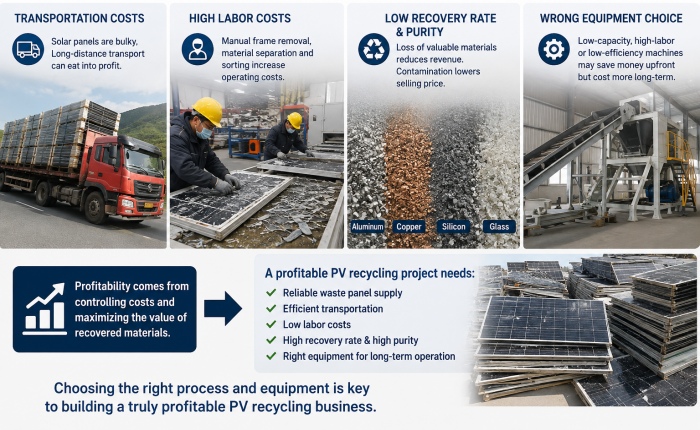 Factors reducing the profitability of solar panel recycling
Recovery rate and material purity also affect the final economics. If valuable aluminum, copper or silicon-containing materials are lost during processing, part of the potential revenue is simply left in the waste stream. Likewise, recovered materials with excessive contamination may have fewer buyers or achieve a lower selling price.
The main factors to consider are:
| Factor | Why it matters |
| Waste panel supply | A stable supply keeps the recycling line running and helps spread equipment and operating costs over more material |
| Transportation cost | Long-distance collection can significantly reduce the margin |
| Labor cost | More manual processing means higher ongoing operating expenses |
| Recovery rate | Better recovery means more saleable material from each ton of PV waste |
| Output quality | Cleaner, better-separated materials generally have more potential buyers |
| Processing capacity | The equipment needs to match the amount of waste panels available |
| Equipment efficiency | Efficient processing can reduce labor and help maintain stable production |
How Does Solar Panel Recycling Equipment Affect Profitability?
The right recycling equipment can make a difference in several ways. Efficient frame removal reduces manual work, while controlled crushing, screening and separation allow different materials to be recovered more effectively. A higher level of automation can also help maintain stable production while reducing the number of operators required.
At DOING, our solar panel recycling equipment uses a dry physical separation process for mechanical recycling. The line can include aluminum frame removal, crushing, screening, airflow separation and other separation stages to recover aluminum, glass, copper and silicon-containing materials.
For customers with different panel types and processing requirements, we offer three main recycling solutions.
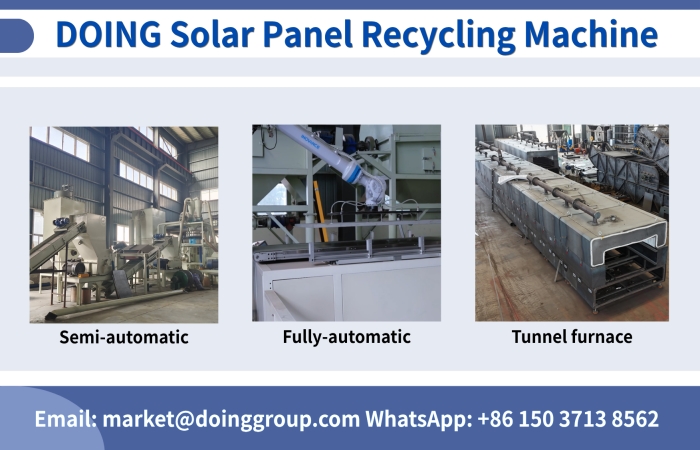 DOING solar panel recycling machine
Semi-automatic line is a practical option for businesses starting with a moderate amount of waste panels or a less consistent supply. It uses a physical multi-stage crushing and separation process and is mainly designed for single-glass panels. Pulse dust collection helps control dust during processing, while the relatively simple configuration keeps the initial investment and labor requirements manageable.
Fully automatic line takes the same basic physical recycling approach but adds a higher level of automation and processing efficiency. It is also designed for single-glass panels and is more suitable for customers with a stable supply of waste PV modules and larger processing volumes. PLC control reduces manual intervention, while the dry separation process avoids the need for chemical treatment or wastewater treatment.
Tunnel furnace line is a different option for larger projects, particularly those handling double-glass panels. It uses pyrolysis to remove the EVA layer, allowing the recovery of silicon wafers, complete glass sheets and copper ribbons rather than turning everything into smaller particles. The processing capacity is larger, but the system requires a higher initial investment, higher energy consumption and appropriate exhaust treatment.
So which one makes the most sense for a profitable PV recycling business? It really depends on your situation. If you're starting small or your panel supply isn't always consistent, a semi-automatic line can keep the investment more manageable. If you have a stable supply and want higher throughput with less manual work, a fully automatic line is more suitable. And if you're dealing with large volumes and a significant proportion of double-glass panels, a tunnel furnace system may provide a better fit.
Is Scrap PV Recycling a Good Business to Start?
Before investing in a solar panel recycling plant, it's worth doing the numbers based on your own local conditions rather than relying on a general profit estimate.
Start with your raw material supply. How many tons of waste panels can you actually collect each month? Where are they coming from, and how much will transportation cost? Then look at the materials you expect to recover and find out what local buyers are willing to pay for them.
Once you have these figures, you can compare the expected material revenue with labor, electricity, transportation, maintenance and equipment investment.
That's also why there isn't one solar panel recycling machine that is the "most profitable" for everyone. The right equipment is the one that matches your panel type, available feedstock, processing capacity, target recovered materials and local operating costs.
HENAN DOING has been providing photovoltaic panel recycling equipment to customers in different markets for years. Our factory in Jiaozuo covers more than 40,000 square metres, and we keep equipment prototypes available for customer testing. Our mechanical recycling lines use dry physical separation without chemical treatment, while tunnel furnace projects can be equipped with suitable exhaust treatment according to project requirements. Each system is designed around the customer's actual panel type and processing needs.
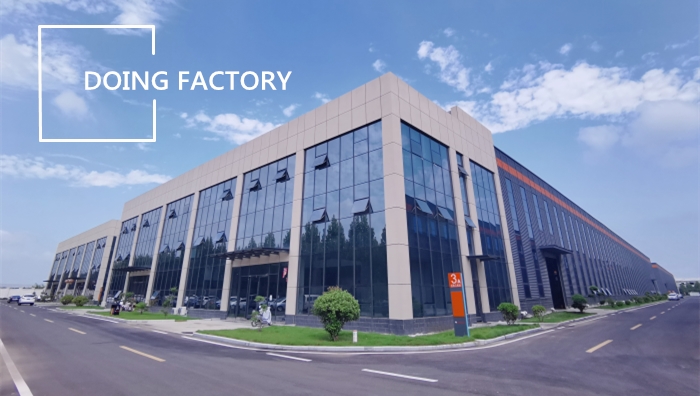 HENAN DOING equipment manufacturing plant
Old and broken solar panels are not automatically a source of profit, but they don't have to be a waste disposal problem either. With a stable supply of PV waste, suitable processing technology and a reliable market for recovered materials, solar panel recycling can become a viable long-term business.
If you're considering starting a scrap PV recycling business, send us your panel type, expected processing capacity and available raw material supply. The DOING engineering team can help you evaluate the recycling process and choose a suitable equipment configuration before you invest.
- Email:
- Tel/WhatsApp:
- Q:
Is Recycling Old or Broken Solar Panels a Profitable Industry?
- Q:
Which Countries Offer Policy Support for the Lithium-Ion Battery Recycling Business?
- Q:
- Q:
What are the environmental impacts of lithium battery recycling?
- Q:
What is the cost of scrapping one solar panel? Any better recovery solution?
Contact Us
If you want to get more details, you can send E-mail to market@doinggroup.com. Or you can consult our professional engineers and specialized sales team by leaving a message in below form. We will contact you ASAP.