

 WhatsApp

DOING HOLDINGS
Henan Doing Environmental Protection Technology Co., Ltd
E waste recycling machine manufacturer
- WhatsApp: +86 150 3713 8562
- Email: market@doinggroup.com

FAQ

Which Countries Offer Policy Support for the Lithium-Ion Battery Recycling Business?
 July 14, 2026
- FAQ
- Leave a message
- Chat online
The global battery industry is growing rapidly, bringing new opportunities as well as new recycling challenges. As more electric vehicles, energy storage systems, and electronic devices reach the end of their service life, governments are paying greater attention to how waste lithium batteries are collected, recycled, and returned to the supply chain.
Instead of treating battery recycling simply as waste management, many countries now see it as part of their resource strategy. New regulations, recycling targets, and producer responsibility programs are creating a more supportive environment for the lithium battery recycling business. For companies planning to invest in this industry, keeping up with the latest battery recycling policy is becoming just as important as understanding the market itself.
Government support comes in different forms. Some countries focus on regulations that require battery collection and recycling, while others encourage investment through funding, tax incentives, or producer responsibility programs. The table below provides a quick overview of the latest policy support in major battery recycling markets.
| Countries Supporting The Lithium Battery Recycling Business in 2026 | ||
| Country/Region | Key Policy or Program | What It Means for the Market |
| European Union | EU Battery Regulation, WEEE Directive | Higher recycling requirements, recycled content targets, and stable market demand |
| United States | Inflation Reduction Act (IRA), DOE programs | More investment, tax credits, and recycling projects |
| China | Extended Producer Responsibility (EPR), battery traceability | Well-developed recycling system with resource comprehensive utilization tax incentives |
| India | Battery Waste Management Rules | Rapidly expanding recycling market |
| Canada | Critical Minerals Strategy | More focus on resource recovery |
| Australia | Battery Stewardship Scheme | Improved battery collection network |
| Japan | Resource Circulation Policy | Continued support for material recycling |
| South Korea | National battery recycling initiatives | Strong support from the battery industry |
(Notice:Policies may change over time, and implementation can vary depending on local regulations.)
European Union
The European Union continues to lead the way in battery recycling regulations. The EU Battery Regulation is being implemented in stages through 2026, introducing requirements for battery collection, recycled content, and battery passports. Together with the WEEE Directive, these rules are helping build a more complete recycling system while creating long-term demand for compliant lithium battery recycling equipment that meets high recovery rates (e.g., 80% lithium by 2031).
United States
Battery recycling is receiving increasing support in the United States through the Inflation Reduction Act and programs funded by the Department of Energy. As domestic battery manufacturing continues to expand, investment in recycling infrastructure is also growing, creating more opportunities for the lithium battery recycling business and equipment that supports domestic content requirements.
China
China has established a relatively mature recycling system supported by Extended Producer Responsibility (EPR) and battery traceability requirements. With one of the world's largest electric vehicle markets, China continues to generate a large supply of end-of-life batteries, providing a solid foundation for the recycling industry.
India
India is becoming one of the fastest-growing battery recycling markets. The Battery Waste Management Rules require battery producers and importers to participate in battery collection and recycling. As EV adoption continues to increase in 2026, demand for recycling capacity is expected to grow steadily.
Canada
Canada's Critical Minerals Strategy highlights the importance of recovering valuable battery materials to strengthen domestic supply chains. Government-backed research and industrial projects are helping accelerate the development of battery recycling technologies.
Australia
Australia is expanding its Battery Stewardship Scheme to improve nationwide battery collection and recycling. As battery use continues to increase, the country is gradually building a more organized recycling network supported by government and industry.
Japan
Japan has long encouraged efficient resource utilization through its resource circulation policies. Battery recycling remains an important part of this strategy, with continued support for recovering valuable materials from used batteries.
South Korea
South Korea is strengthening battery recycling alongside the growth of its battery manufacturing industry. Government initiatives are helping improve recycling capacity while supporting a more secure supply of battery materials.
Policy support is driving demand for reliable recycling technology
As battery recycling regulations become more established, recycling plants are expected to achieve not only higher recovery rates but also safer and more standardized operations. This means reliable processing technology is playing a bigger role in helping recycling companies meet local environmental, traceability, and efficiency.
HENAN DOING Holding provides advanced, industrial-grade lithium battery recycling equipment for helping investors build competitive, policy-compliant, and future-proof recycling plants worldwide.
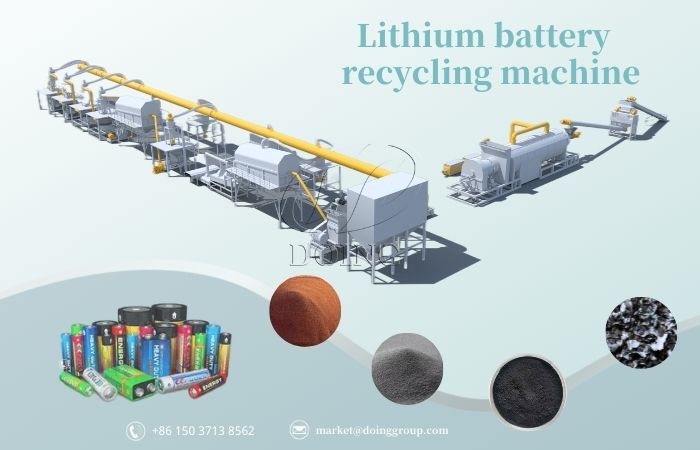 DOING lithium-ion battery recycling machine
DOING Li-ion battery recycling machine solutions are engineered around five core pillars to ensure your business alignment with global policy trends:
1.Multi-Standard Compliance & Certified Safety
Our equipment is built to comply with international environmental and safety standards (such as CE, ISO, and local EPA requirements), helping you smoothly pass government environmental impact assessments (EIA).
And to mitigate the risks of thermal runaway during EV battery dismantling and crushing, our systems feature automated nitrogen protection, explosion-proof designs, and real-time temperature monitoring, ensuring maximum operational safety.
2.High-Efficiency Separation & Maximum Resource Circulation
Through crushing, separation, and sorting processes, valuable materials such as copper, aluminum, iron, plastics, and black mass can be efficiently recovered for further utilization. Our lithium battery recycling equipment can achieve a metal separation purity of over 98%. Recovery rates for key metals such as lithium surpass industry standards (meeting the EU's 80% lithium recovery target and China's requirements for comprehensive resource utilization). The solution significantly boosts single-line processing capacity and economic returns, enabling customers to achieve a faster return on investment and benefit from tax incentives for comprehensive resource utilization.
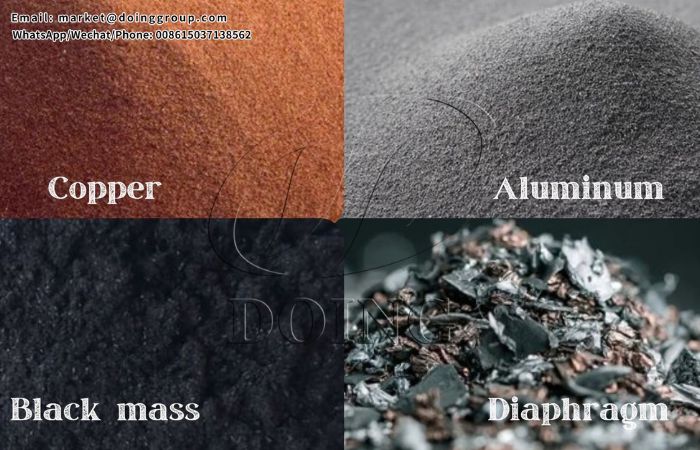 Extracting valuable metals from lithium batteries
3.Eco-friendly/Gree-Tech Li-ion Batery Recycling Process
Equipped with advanced environmental protection facilities, such as pulse dust removal systems, air purification units, and even adsorption towers, the process ensures that lithium battery recycling complies with technical specifications for pollution control in the treatment of waste lithium-ion power batteries, as well as strict EU environmental standards. Low-pollution processes effectively minimize secondary pollution, supporting dual carbon goals and the development of sustainable supply chains.
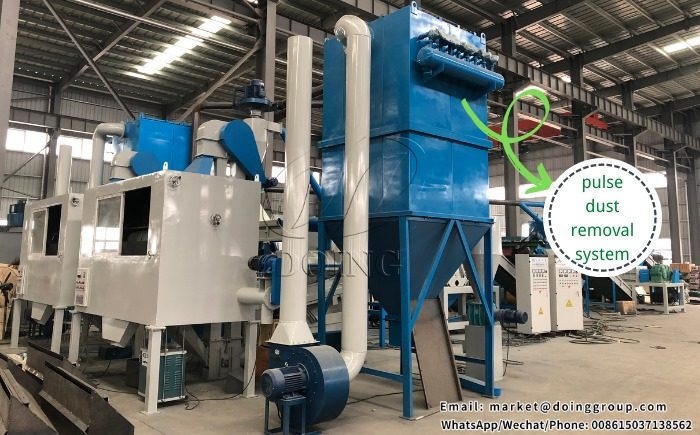 Lithium battery recycling pulse dust removal system
4.Professional Customization for Diverse Battery Feedstocks
DOING Li-ion battery crushing seperation line can processe various types of waste lithium batteries, including EV batteries, power batteries, cylindrical batteries, Lithium Iron Phosphate (LiFePO4/LFP) batteries, pouch batteries, and consumer lithium batteries.
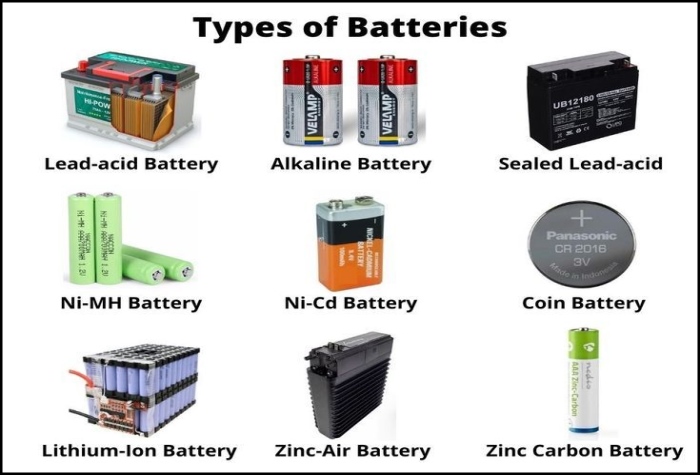 Types of recyclable lithium batteries
Our engineering team can also customize recycling solutions based on battery type, production capacity, and local lithium-ion battery recycling policies & project requirements, helping customers build efficient and practical recycling plants in different markets.
As more countries continue to improve their battery recycling policy in 2026, the demand for reliable recycling equipment is expected to keep growing. If you are planning to start or expand a lithium battery recycling business, HENAN DOING Holding is ready to provide professional equipment solutions and technical support. Feel free to contact us to discuss your project and find the right recycling solution for your needs.
PREV:Nothing
Contact Us
- Email:
- Tel/WhatsApp:
FAQ
- Q:
Which Countries Offer Policy Support for the Lithium-Ion Battery Recycling Business?
- Q:
- Q:
What are the environmental impacts of lithium battery recycling?
- Q:
What is the cost of scrapping one solar panel? Any better recovery solution?
- Q:
What Preparations are Needed to Establish a Battery Black Mass Recycling Plant in India?
Contact Us
If you want to get more details, you can send E-mail to market@doinggroup.com. Or you can consult our professional engineers and specialized sales team by leaving a message in below form. We will contact you ASAP.