

 WhatsApp

DOING HOLDINGS
Henan Doing Environmental Protection Technology Co., Ltd
E waste recycling machine manufacturer
- WhatsApp: +86 150 3713 8562
- Email: market@doinggroup.com

FAQ

What are the environmental impacts of lithium battery recycling?
 May 9, 2026
- FAQ
- Leave a message
- Chat online
Lithium battery use has grown quickly over the past decade. In 2023 alone, global lithium battery demand exceeded 900 GWh, most of it going into electric vehicles and energy storage systems. With that growth comes a steady rise in end-of-life batteries. The International Energy Agency estimates that by 2030, the world will have more than 12 million tons of lithium batteries to retire each year. How we handle this waste stream matters. The environmental impact of lithium battery recycling varies depending on the method used, but when done properly, it offers clear advantages over landfilling or stockpiling. So what are the actual environmental impacts? They fall into three main areas:
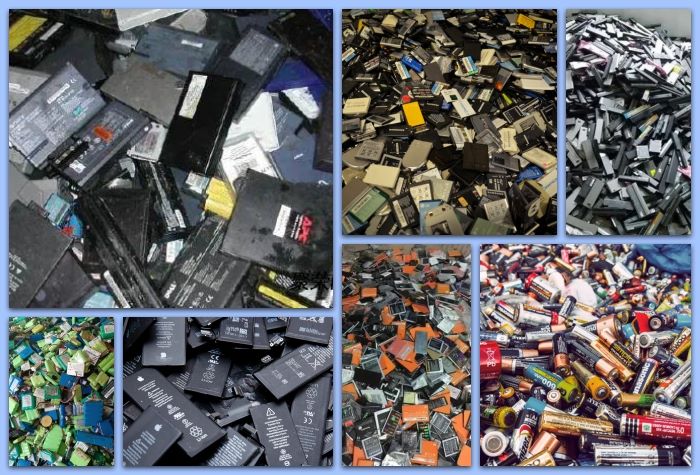 Retired and discarded lithium-ion batteries
Reducing the need for raw material extraction
Mining lithium, cobalt, and nickel takes a toll on the environment. It uses large amounts of water, disturbs landscapes, and leaves behind tailings that can contaminate local water sources. In salt flats in South America, lithium extraction consumes about 500,000 gallons of water per metric ton of lithium. Recycling directly reduces the need for new mining. Each ton of recycled lithium battery materials cuts the demand for virgin ore extraction. This is one of the clearest benefits of lithium battery recycling: less land disturbance, fewer water withdrawals, and less waste rock left behind.
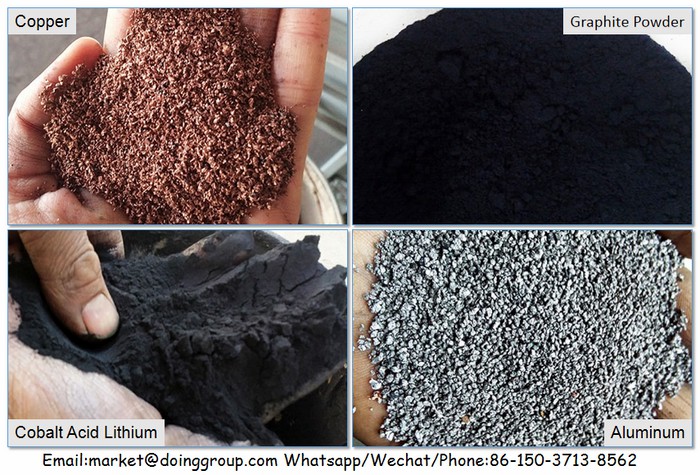 Metals extracted from discarded lithium batteries
Lowering energy use and emissions from material production
Processing virgin metals also consumes a lot of energy. Producing lithium from ore uses around 5 to 8 times more energy than recovering it from used batteries. The case for cobalt is even clearer — recycled cobalt requires about 70 percent less energy than newly mined cobalt. By feeding recovered materials back into supply chains, recycling avoids much of the carbon emissions tied to mining, crushing, and refining. Studies that look at the environmental impact of lithium battery recycling consistently find that recycled materials have a smaller carbon footprint than virgin equivalents. That difference adds up when scaled across millions of tons of batteries.
Avoiding landfill pollution and fire risks
When lithium batteries end up in landfills, they are not harmless. Over time, casings corrode, and electrolyte fluids can leak out. These fluids contain lithium salts and organic solvents that may contaminate soil and groundwater. Worse, damaged batteries in landfills or waste piles can short-circuit. The result is fires that are difficult to put out and that release toxic gases. Portable fire suppression systems are not built for lithium battery fires. Recycling removes this risk by taking batteries out of the waste stream completely. That is an often overlooked environmental benefit: preventing fires and avoiding the cleanup costs and pollution that come with them.
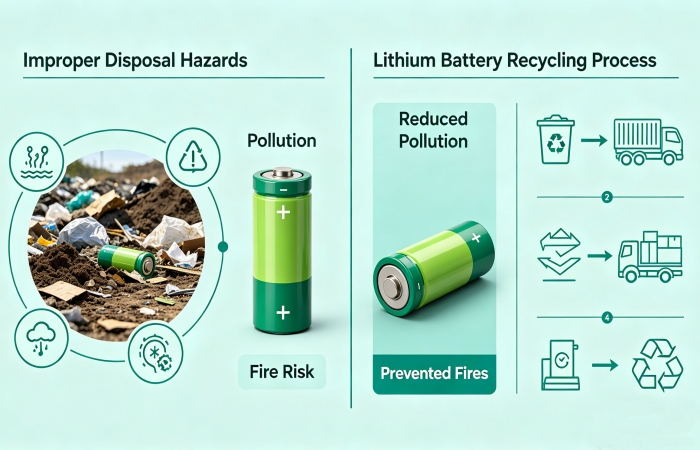 Recycling of lithium batteries helps avoid landfill pollution and fire risks
The environmental benefits above depend on using the right recycling method. Some older methods use chemical baths or high-heat smelting, which create wastewater or air emissions. A cleaner approach is dry mechanical separation. DOING lithium-ion battery recycling equipment uses a dry physical multi-stage crushing and separation process. There is no water involved, so no liquid waste to treat. The system also includes pulse dust collection, which captures fine particles before they leave the machine. That means less dust in the air and better working conditions for operators. The recovered copper, aluminum, and black mass come out with good purity. Because the process is mostly automated through a PLC control system, it runs consistently without extra energy waste. For recyclers who want the environmental impact of lithium battery recycling to be net positive, using equipment like this makes a real difference.
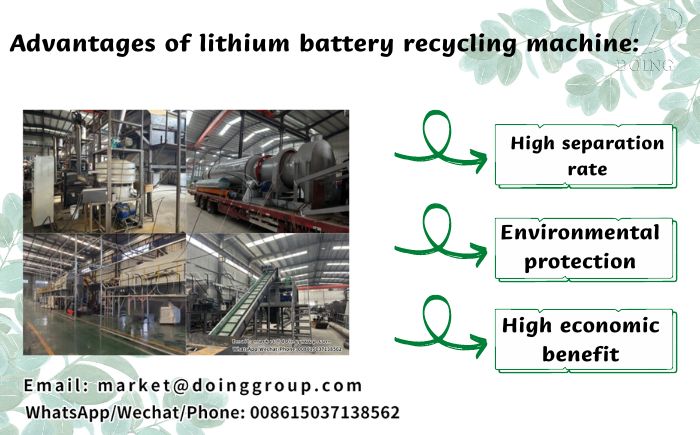 Advantages of DOING lithium battery recycling machine
If you are looking at setting up a recycling line and want equipment that is clean, automated, and field-proven, contact HENAN DOING. We can walk you through technical details, share project references, and help you match the right setup to your expected feed volume. Reach out through our website.
Contact Us
- Email:
- Tel/WhatsApp:
FAQ
Contact Us
If you want to get more details, you can send E-mail to market@doinggroup.com. Or you can consult our professional engineers and specialized sales team by leaving a message in below form. We will contact you ASAP.