



 WhatsApp

DOING HOLDINGS
Henan Doing Environmental Protection Technology Co., Ltd
E waste recycling machine manufacturer
- WhatsApp: +86 150 3713 8562
- Email: market@doinggroup.com

Industry News

Why Is The Solar Panel Recycling Market Growing Rapidly?
 May 14, 2026
- Industry News
- Leave a message
- Chat online
In recent years, the solar panel recycling market has been growing rapidly, attracting significant attention from investors. The factors driving the rapid growth of this industry are primarily reflected in the following aspects:
1. The Peak of Decommissioning Accelerates Market Expansion
Global photovoltaic (PV) installation capacity began to experience explosive growth around 2010. Based on a standard design lifespan of 25 to 30 years, the first wave of large-scale solar panel decommissioning is projected to occur between 2025 and 2035.
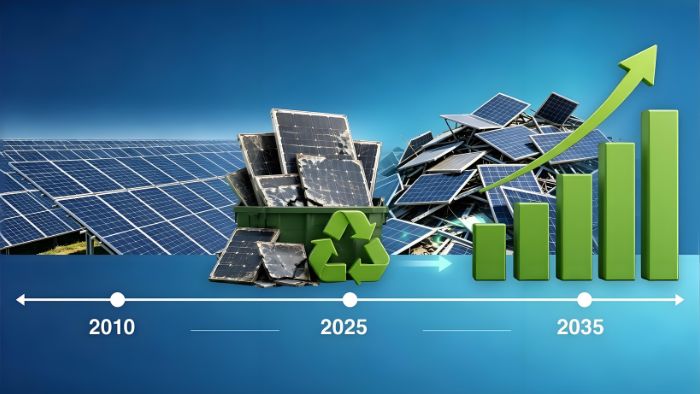 End-of-life solar panel recycling market trends
The following countries feature large-scale PV panel installations and correspondingly high decommissioning volumes; furthermore, their future stockpiles of end-of-life PV panels are projected to continue rising, growing at a compound annual growth rate of 20.3% to 36.8%:
①China: Annual PV panel decommissioning volume is projected to exceed 40 GW by 2030, maintaining its position as the global leader.
②United States: Decommissioning volume is projected to exceed 15 GW by 2030, ranking second globally.
③European Union (as a whole): Decommissioning volume is projected to exceed 12 GW by 2030, with Germany, Spain, and Italy accounting for over 70% of the EU's total decommissioning volume.
④India: Following explosive growth in PV installation capacity in recent years, decommissioning volume is projected to exceed 8 GW by 2030.
⑤Japan: Decommissioning volume is projected to exceed 5 GW.
⑥South Korea: Decommissioning volume is projected to exceed 3 GW.
⑦Australia: Decommissioning volume is projected to exceed 2.5 GW.
⑧Brazil: Characterized by extremely rapid growth in PV installations in recent years, decommissioning volume is projected to exceed 2 GW by 2030.
This "decommissioning wave" presents opportunities for market expansion within the solar panel recycling sector. Meanwhile, operators of PV power plants are placing increasing emphasis on the compliant disposal of modules following their decommissioning, and are willing to entrust recycling operations to specialized service providers.
2. Strict Enforcement of Environmental Policies and Regulations
Many countries and regions have already enacted, or are currently formulating, specific regulations regarding discarded PV modules. For instance, the European Union has incorporated PV modules into the Waste Electrical and Electronic Equipment (WEEE) Directive, requiring manufacturers to assume responsibility for recycling. Numerous countries and regions across Asia and North America are also actively formulating or refining relevant recycling policies and regulations.
Furthermore, some local governments have provided recycling subsidies or tax incentives, thereby further reducing recycling costs for businesses. The continuous improvement of environmental policies and regulations provides a robust institutional framework for the growth of the solar panel recycling market, while also encouraging more enterprises to conduct recycling operations in a standardized manner.
3. Economic Value Drives Recycling Business Models Maturation
The construction of solar panels incorporates a variety of valuable materials—such as aluminum frames, glass, silicon wafers, and metals like silver and copper. Through specialized solar panel recycling process, these materials can be efficiently extracted and reintroduced into industrial production, enabling recycling enterprises to generate substantial revenue by selling recovered materials.
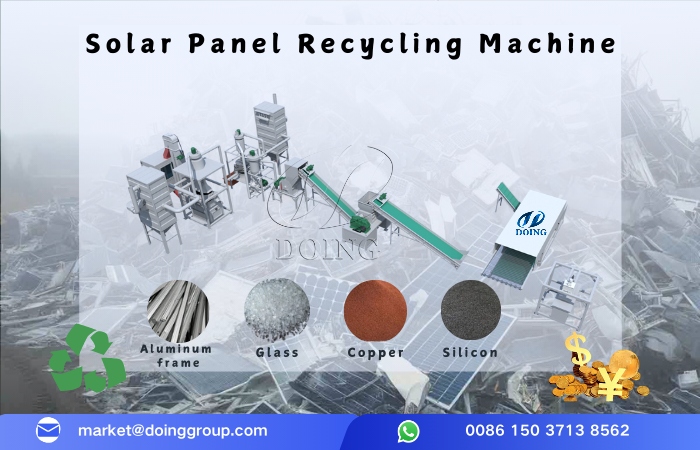 Valuable materials recyclable from solar panels
This closed-loop business model of resource recycling serves as the core driving force behind the continuous growth of the solar panel recycling market.
4. Technological Iteration Lower Recycling Barriers
Early-stage photovoltaic module recycling relied primarily on manual dismantling, which was inefficient and posed safety risks. Today, however, the application of technologies such as automated dismantling and thermal decomposition has significantly enhanced recycling efficiency while reducing operational costs.
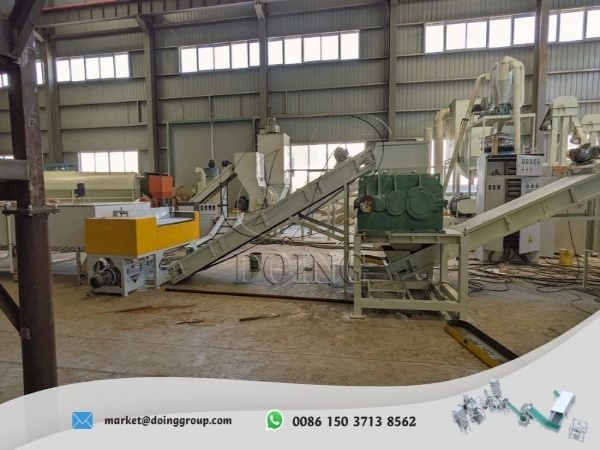
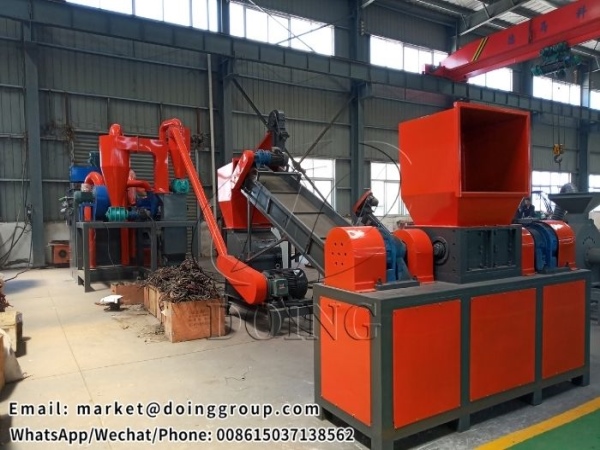
For instance, the solar panel recycling machine developed by Doing Company is specifically designed to address the aforementioned process pain points. First, automated mechanical separation technology is employed to efficiently remove aluminum frames and junction boxes; next, pyrolysis is utilized to process the EVA film, enabling the complete recovery of the glass; finally, the resulting intact solar cells undergo crushing and sorting to recover silicon powder and copper. The maturity of these technologies has made solar panel recycling both more feasible and profitable.
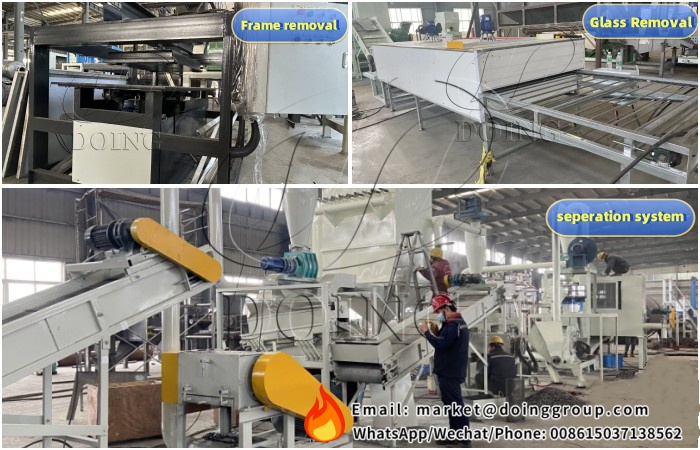 Solar panel recycling machine process
The solar panel recycling market is not merely a "future" market; it is experiencing rapid growth right now. For photovoltaic power plant owners, recycling enterprises, and investors planning to position themselves within the circular economy, now is the optimal time to build out production capacity and establish a technological advantage. If you are currently exploring the solar panel recycling market, we invite you to contact us at any time to receive equipment solutions and technical consulting tailored to the scale of your operations.
Contact Us
- Email:
- Tel/WhatsApp:
News
Contact Us
If you want to get more details, you can send E-mail to market@doinggroup.com. Or you can consult our professional engineers and specialized sales team by leaving a message in below form. We will contact you ASAP.